

A contract deadline can matter as much as the contingency itself. In Tavernier, buyers commonly consider inspection, mortgage-financing, home-sale, and appraisal contingencies, choosing terms that fit their purchase. Florida contract deadlines are generally firm and count as calendar days unless the contract says otherwise. These protections apply only when buyers meet the deadline and provide proper written notice.
It’s understandable to focus on which protections to include, especially when balancing a current home sale, loan approval, and a property’s condition. But the timing and wording of each clause can shape what happens if plans change or a deadline passes.
Learn how home-sale and mortgage contingencies work, why Florida deadlines matter, and how to tailor and negotiate the real estate contingencies to include in Tavernier, FL. We’ll also explain how inspection and appraisal terms affect your choices, so you can approach a contract with a clearer understanding of the protections and obligations involved.
Key Takeaways
- Inspection terms can shape your options if a property issue surfaces, so understand what the contract allows before deciding how to respond.
- A home-sale contingency can give you time to sell your current home, while a kick-out clause may let the seller keep marketing the property.
- A financing contingency can protect your purchase if you can’t secure the mortgage or loan terms described in the contract.
- Tailor contingency wording and timelines to your situation, including how appraisal, insurance, title, and association-document reviews may affect the transaction.
What is a sale-of-home contingency?
A sale-of-home contingency gives a buyer time to sell an existing property before purchasing another. An inspection contingency serves a different purpose: it sets out the buyer’s inspection rights and options if the property has problems. In Tavernier, these clauses address separate risks, so one doesn’t replace the other.
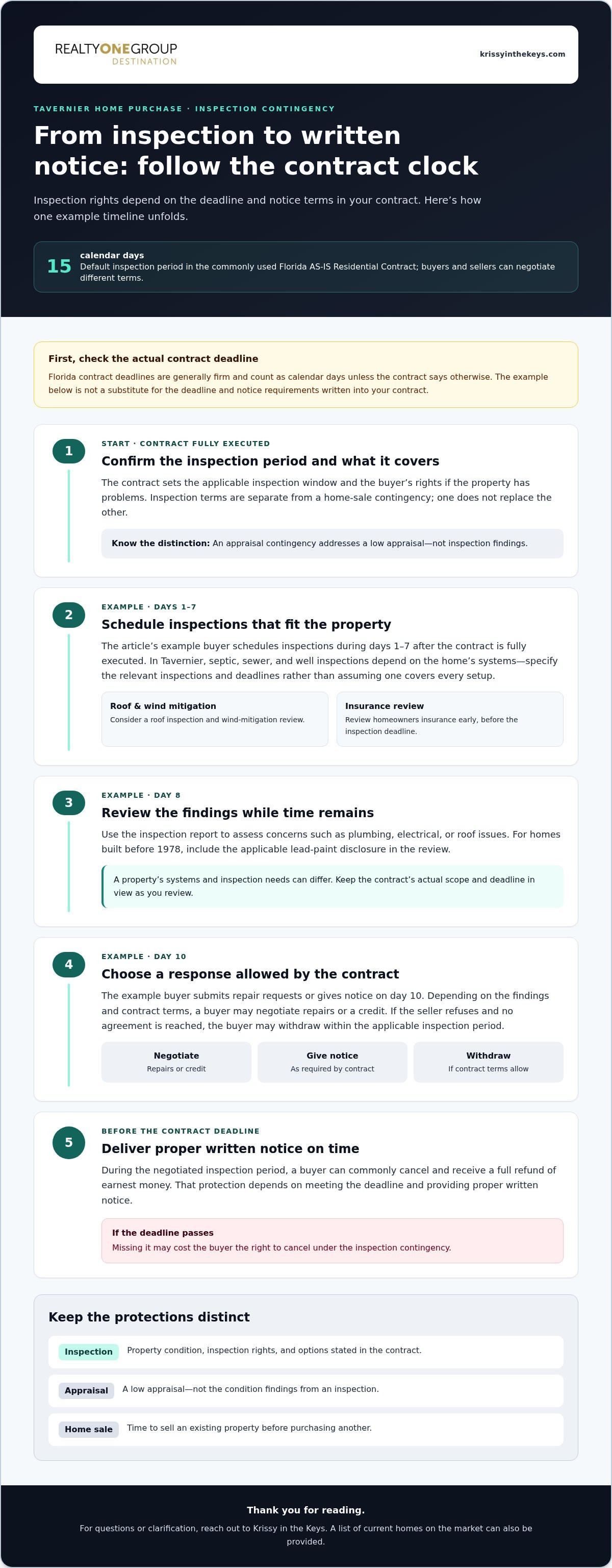
The Florida AS-IS Residential Contract includes a “Property Inspection: Right to Cancel” section. Under the commonly used form, the default inspection period is 15 calendar days, though buyers and sellers can negotiate terms. During the negotiated period, a buyer can commonly cancel and receive a full refund of earnest money. Deadlines are generally firm, count as calendar days unless the contract says otherwise, and require proper written notice.
For example, a buyer might schedule inspections during days 1-7 after the contract is fully executed, review the report on day 8, then submit repair requests or give notice on day 10. Those steps fit only if they fall within the contract’s actual deadline. Missing it may cost the buyer the right to cancel under that contingency.
In Tavernier, septic, sewer, and well inspections depend on the property’s systems. Specify the relevant inspection and deadline in the contract rather than assuming one inspection covers every utility setup.
For a Florida Keys property, consider a roof inspection and wind-mitigation review alongside an early homeowners-insurance review. These can help identify roof condition, wind-resistant features, and potential insurance concerns before the inspection deadline.
If an inspection finds plumbing, electrical, roof, or other concerns, a buyer may negotiate repairs or a credit. If the seller refuses and no agreement is reached, the buyer may withdraw within the applicable inspection period. An appraisal contingency is separate: it addresses a low appraisal, not inspection findings.
For homes built before 1978, the U.S. Environmental Protection Agency says a lead-paint disclosure applies. Include that disclosure in the review, then use the inspection findings and contract deadlines to decide whether to negotiate, cancel, or proceed.
Home-sale contingency
A sale-of-home contingency makes a Tavernier purchase conditional on the buyer selling an existing property. The timeframe varies and is set by addendum, so buyers should consider how their current sale will align with their next purchase.
Kick-Out Clauses
A kick-out clause lets the seller continue marketing the property while the first buyer tries to sell a home. If another offer arrives, the first buyer typically gets 48-72 hours to remove the sale contingency or forfeit the offer. That deadline can be tight if the buyer still needs a firm sale or closing date. A contingent listing may remain active, and another buyer may submit an offer. Buyers should understand the response time and what removing the contingency means for their transaction.
Permits and Code Compliance
For a Monroe County purchase, include review of permit history, code compliance, and possible unpermitted work in the contract’s due-diligence terms. Compare available permit records with visible changes, such as an added room or altered roofline, and set a deadline for raising concerns. If records and the property appear inconsistent, identify the buyer’s options before the home-sale contingency expires. An attorney can explain proposed contract language and how it may protect the buyer if permit concerns affect approval or the planned transaction.
Title, Survey, and Boundary Contingencies
A title contingency allows review of title documents and a response to covered concerns before closing; most real estate sales contracts automatically include one. Monroe County buyers should also address survey review, boundary questions, and easements in the contract. State the review deadline and how objections will be handled, including the process for resolving a title defect. A seller who fails to cure a title defect by the title commitment deadline may be in breach of contract. Clear terms help buyers assess whether a boundary or easement issue affects the property they intend to purchase.
Mortgage financing contingency
A mortgage financing contingency makes a Tavernier purchase conditional on obtaining the loan terms described in the real estate contract. It can protect buyers if a lender denies the mortgage or a major interest-rate change makes payments unaffordable. The clause also gives sellers a defined approval period rather than leaving the transaction open-ended.
Florida purchase contracts commonly require buyers to apply for a loan within 5 days of the effective date. A financing contingency often allows around 30 days for loan approval. These are separate milestones: applying promptly gives the lender time to review the application, while the contingency deadline determines how long the buyer has to satisfy its terms. Buyers should track both dates alongside the closing date.
Read the financing language for its stated loan amount, type, approval conditions, and deadline. A lender’s initial review isn’t the same as a mortgage commitment. If the buyer can’t obtain the commitment by the financing-contingency deadline, the contract may allow cancellation and deposit recovery. That protection depends on meeting the deadline and delivering proper written notice. A late notice can leave the buyer bound by the contract.
Interest-rate protection depends on what the clause says about acceptable loan terms. If a rate change raises projected payments beyond what the buyer can manage, the financing contingency may provide an exit when its conditions are met. Sellers, in turn, benefit from clear timelines and timely updates about approval. Keep financing dates distinct from an inspection contingency, which addresses the property’s condition rather than loan approval.
For a Tavernier condominium or home in a homeowners association, review the association documents promptly after receiving them. Florida buyers may cancel within three days of receiving required HOA or condo documents, excluding weekends and legal holidays. These review periods can be short, so coordinate document review with lender approval and the contract’s other deadlines.
Customizing and negotiating contingency clauses
Choosing the right Tavernier FL real estate contingencies to include starts with matching each clause to the decision it needs to protect. In a Tavernier contract, consider what could affect your purchase, such as financing, association documents, or an appraisal. Define the condition, deadline, notice method, and possible outcome so both parties understand their responsibilities before signing.
Florida’s AS IS Residential Contract doesn’t necessarily include an appraisal contingency. Buyers can negotiate one to address a low valuation, such as allowing renegotiation or cancellation if the appraisal falls below the purchase price. State how the parties may respond and set a deadline. Without that protection, a buyer using financing may need another way to address a gap between the appraisal and the agreed price.
Inspection timing also affects how competitive an offer appears. A buyer might propose a 2-day or 3-day inspection contingency rather than a longer review period. A shorter window can make an offer more appealing, but leaves less time to arrange inspections and decide whether to negotiate, proceed, or cancel. Choose a period that matches the property and your ability to act promptly.
Custom terms can be added as an addendum or in the contract’s additional terms section. After signing, adding a contingency requires both parties’ written agreement through an addendum. Before signing, specify the triggering event, deadline, required notice, and available response. For example, explain what happens if an appraisal is low or association documents raise concerns. Clear wording can reduce disputes about cancellation rights or the deposit.
The Tavernier FL real estate contingencies to include should balance the buyer’s need for information with the seller’s need for a firm timeline. Review financing, inspection, appraisal, and document-review deadlines together so one decision doesn’t unintentionally outlast another.
Explore homes for sale in Tavernier
Krissy in the Keys (Krissy Carnahan, Realtor): Luxury Waterfront Home Sales
Krissy in the Keys (Krissy Carnahan, Realtor) helps buyers and sellers put contract terms in context during luxury property transactions. Turn to her for Buyer Representation for Luxury Estates or Seller Representation of Luxury Estates when weighing contingency timelines, negotiating offer terms, or preparing to respond to another offer. For a waterfront or vacation property, thoughtful negotiation can help align the contract with your goals and the property’s details.
Reach out with questions or requests for clarification, or ask for a list of current homes on the market. Thank you for reading. Get in touch whenever you’re ready to continue the conversation.
Choose Your Next Step with Confidence
Your next move is to decide which contract terms fit your priorities, rather than treating every contingency as equally important. Before making or responding to an offer, consider what could change your decision: uncertainty about selling your current home, financing, or the property itself. Then discuss how the proposed wording and timeline reflect those priorities. The right balance can help you move forward with a clearer understanding of your commitments and choices.
For guidance with luxury waterfront property, buyer representation, or seller representation, Krissy in the Keys can help you navigate the real estate process. If you’re still weighing the real estate contingencies to include in Tavernier, FL, bring your questions and requests for clarification. Prospective buyers can also ask for a list of current homes on the market.
Thank you for reading. Please reach out when you’re ready to take the next step.
May your next decision bring you closer to the home and lifestyle you’re seeking.
Frequently Asked Questions
Why are contract deadlines so strict in Florida real estate?
Florida contract deadlines are generally firm because each party needs a clear point to act, respond, or move toward closing. They’re typically counted as calendar days unless the contract says otherwise, so weekends may count. For example, don’t leave a notice due on a stated date until the next business day. Written extensions require both parties’ agreement.
Can a seller reject an offer because it has too many contingencies?
Yes. A seller may decide that an offer’s conditions or timelines don’t suit their priorities and choose not to accept it. For example, an offer dependent on selling another property may feel less certain to a seller than one without that condition. Buyers can make terms clearer by stating the relevant deadlines and what happens if a condition isn’t met.
Does the Florida AS IS contract include an appraisal contingency?
No, the Florida AS IS Residential Contract doesn’t necessarily include an appraisal contingency. A buyer who wants protection if the appraisal falls below the purchase price should address that condition in the offer. The clause can explain whether the parties may renegotiate, whether the seller may pay the difference, or whether the buyer can cancel under the agreed terms.
How long is the inspection period in Florida?
In the commonly used Florida AS IS Contract, the default inspection period is 15 calendar days. The parties may negotiate a different period, and inspection windows commonly range from 10 to 15 days. Check the effective date and the exact contract language when planning appointments. A shorter period leaves less time to arrange inspections and consider the findings.
What happens if I waive contingencies to win a bidding war?
Waiving a contingency removes that contract-based protection. If you waive an inspection contingency, you risk accepting undisclosed defects; discovering hidden issues after closing may leave you pursuing a fraud or concealment claim. Waiving financing protection can also leave you responsible for proceeding if the mortgage doesn’t come through. Consider each contingency separately before trading protection for a stronger offer.
Should You Waive Contingencies in a Competitive Florida Market?
Usually, consider narrowing a contingency before removing it entirely. A shorter inspection window, such as 2 or 3 days, may make an offer more appealing while preserving time to assess the property. Keep financing or appraisal terms that matter to your ability to complete the purchase. The best offer balances a seller’s need for clear terms with your capacity to close.
Thank you for reading. Please reach out to Krissy in the Keys (Krissy Carnahan, Realtor) with any questions or requests for clarification. Prospective buyers are welcome to ask for a list of current homes on the market.


