What if the very regulations you fear are actually the ultimate protectors of your home's multi-million dollar value? Many investors view the CCCL as a "no-build" barrier; however, it's actually a sophisticated engineering framework designed to safeguard the natural beauty and structural integrity of your property. If you've felt the sting of anxiety over conflicting setback rules or the fear of purchasing an "unbuildable" lot, you aren't alone. This Florida Keys coastal construction control line guide provides the clarity you need to move forward with your waterfront dreams while respecting the delicate island ecosystem we all cherish.
We understand that your time is valuable and your investment is significant. You want to ensure your luxury renovation or new build remains both compliant and resilient against the elements. Whether you're dealing with the standard 50-foot setback in Monroe County or preparing for an FDEP permit application, the process shouldn't be a source of stress. This guide offers a clear roadmap through the current 2026 permitting landscape. We'll detail everything from the $4,000 fee for larger single-family dwellings to the nuances of "pocket beach" regulations. You'll gain a clear understanding of what's possible seaward of the line, giving you the confidence to protect your investment's long-term viability.
Key Takeaways
- Understand how the scientific "100-year storm event" standard determines your building footprint to ensure your estate remains a legacy for generations.
- Master the "Pocket Beach" nuance to identify when the 50-foot setback rule takes precedence over state-level boundaries on your specific shoreline.
- Learn the sophisticated engineering requirements for luxury amenities like infinity-edge pools to ensure your vision meets FDEP standards.
- Use this Florida Keys coastal construction control line guide to assemble a specialized team and navigate the pre-application process with total confidence.
- Discover how deep-rooted local insight and advanced negotiation skills protect your interests during high-stakes waterfront acquisitions and sales.
What is the Coastal Construction Control Line (CCCL) in the Florida Keys?
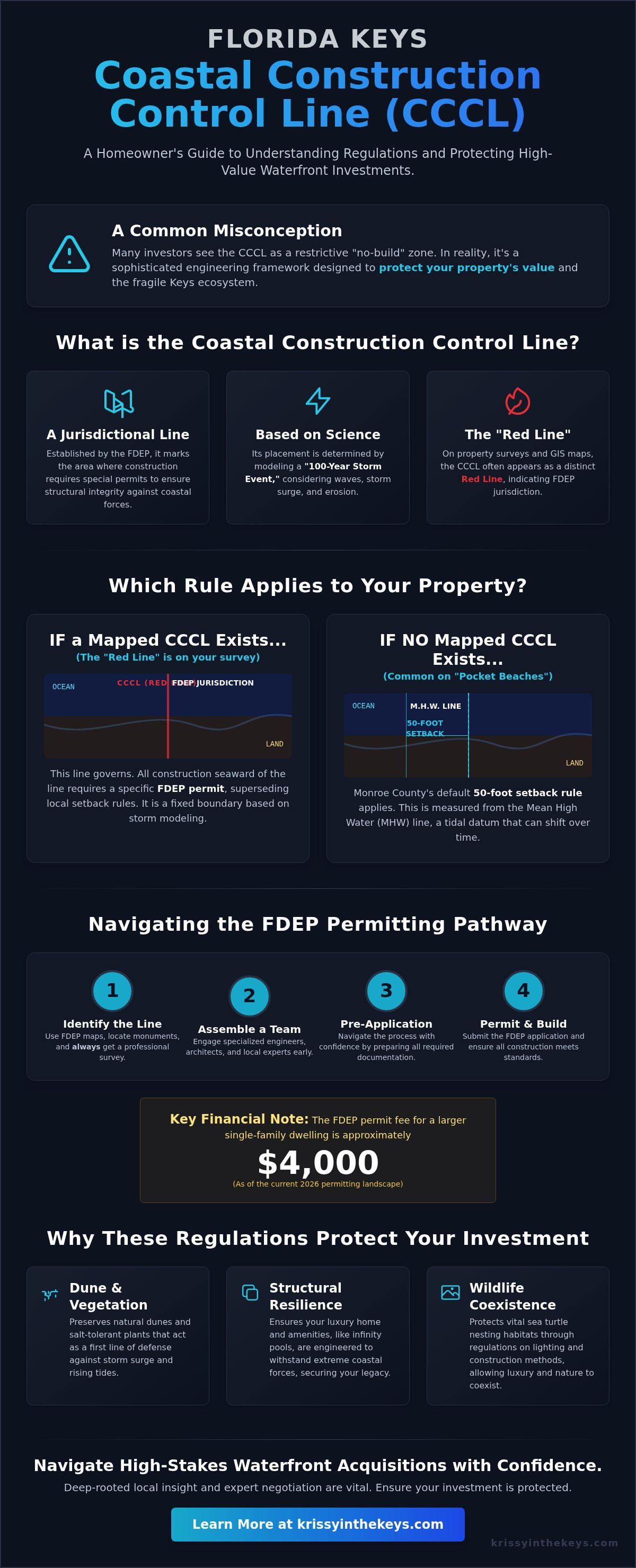
Understanding the Coastal Construction Control Line (CCCL) is the first step toward securing your legacy in the islands. At its core, the CCCL is a jurisdictional boundary established by the Florida Department of Environmental Protection (FDEP). It isn't a wall or a "no-build" zone; rather, it's a line that defines where the state has a vested interest in protecting the shoreline. This Florida Keys coastal construction control line guide helps you see that while the regulations are strict, they exist to ensure your luxury estate can withstand the unique pressures of our tropical environment.
The placement of this line is rooted in rigorous science. Engineers and environmental scientists use sophisticated modeling to predict the impact of a "100-year storm event." This isn't just about wind; it's about the combined force of high-velocity waves, storm surges, and significant erosion. If a property falls seaward of this line, it's considered to be in a high-risk area for these coastal forces. On your property survey or within local GIS mapping tools, this boundary often appears as a distinct "Red Line." Seeing your dream home's footprint bisected by this line can be startling, but it's simply a signal that your project requires a higher level of engineering and a specific FDEP permit.
The Purpose of Coastal Regulation in the Upper Keys
Why do we have these rules in places like Key Largo and Islamorada? The primary goal is the long-term protection of the very features that make the Keys so desirable. Effective coastal management strategies are essential for preserving our fragile dune systems and native salt-tolerant vegetation. These natural features act as the first line of defense against rising tides. Additionally, these regulations protect vital sea turtle nesting habitats. By requiring specific lighting and construction methods, the FDEP ensures that luxury development and local wildlife can coexist beautifully. It's about building with the environment, not against it.
Identifying the Line on Your Property
How do you know exactly where the line falls on a potential investment? You can start with a preliminary look using the FDEP Map Direct tool. This digital resource provides a bird's-eye view of jurisdictional boundaries across the islands. However, digital maps have their limits. For precise accuracy, surveyors look for Coastal Range Monuments. These are physical markers, often brass discs set in concrete, placed along the coast to serve as fixed reference points. While these tools are helpful for initial due diligence, a professional survey is non-negotiable for luxury waterfront transactions. You need to know exactly how many square feet of your buildable area fall under FDEP jurisdiction before you commit to a purchase or a design.
The 'Pocket Beach' Nuance: Monroe County’s 50-Foot Setback Rule
Have you ever wondered why two waterfront properties just a mile apart follow completely different building rules? In the Florida Keys, the answer often lies in the "pocket beach" nuance. Unlike the continuous sandy coastlines found in Miami or Palm Beach, our islands feature isolated sandy stretches tucked between jagged, rocky shorelines. Because a formal CCCL hasn't been established for every single inch of Monroe County, the state applies a default 50-foot setback from the Mean High Water (MHW) line. This rule is a cornerstone of any Florida Keys coastal construction control line guide, as it dictates the buildable area for hundreds of luxury estates where the "Red Line" isn't officially mapped.
The Mean High Water line is a tidal datum, while the CCCL is a fixed jurisdictional boundary. Which one takes precedence? Generally, if a CCCL is present, it governs the permitting process through Florida's Coastal Construction Control Line (CCCL) Program. However, in areas without a mapped line, the 50-foot rule is absolute. This becomes even more complex if your property is located on a beach identified as "critically eroded" in the FDEP's annual reports. These areas face higher scrutiny because they lose sand faster than nature can replace it, making the guidance of a trusted real estate advisor essential for identifying these hidden risks before you commit to a purchase.
Monroe County vs. State Jurisdiction
Navigating the overlap between the Monroe County Building Department and the FDEP requires a strategic approach. A local permit doesn't automatically grant you the right to build near the water; you often need FDEP concurrence to move forward. For example, the rocky shorelines of Tavernier might offer more flexibility than the iconic sandy stretches of Islamorada, where the state's protective gaze is much sharper. Ensuring these two agencies are in harmony is the only way to avoid construction halts that can derail a luxury project's timeline.
Exemptions and Variances for the 50-Foot Rule
Can you ever build closer than 50 feet? Florida Statute 161.052 does allow for waivers or variances, but the "hardship" requirement is a high bar to clear. You must prove that the regulation creates an exceptional and unique difficulty for your specific lot. The FDEP also distinguishes between minor and major structures. A simple wooden walkway might face a smoother path than a major habitable structure or a concrete pool. Understanding these categories early prevents your luxury renovation from becoming a regulatory nightmare.
How the CCCL Impacts Your Luxury Waterfront Renovation or Build
Your vision for a coastal masterpiece shouldn't be sidelined by a line on a map. However, the placement of that line dictates exactly where and how you can build. If your home's footprint falls seaward of the boundary, the FDEP often enforces a "siting" requirement. This means your home might need to be moved landward to protect the integrity of the dune system. This isn't just a suggestion; it's a core component of Florida Statutes Chapter 161.55, which governs the design and construction standards within the coastal building zone. Building further back might feel like a compromise, but it's a strategic move to ensure your investment stays dry and secure.
Foundation requirements are equally rigorous for any project in this zone. Forget standard slabs or shallow footings. In the Florida Keys, "piling and beam" construction is often the mandatory standard to ensure your home survives a 100-year storm event. This becomes particularly relevant for those planning a major renovation. Under the "50% Rule," if your improvement costs exceed half of the structure's market value, the entire home must be brought up to modern standards. This Florida Keys coastal construction control line guide emphasizes that early planning is the only way to avoid unexpected budget spikes that can occur when these structural triggers are pulled.
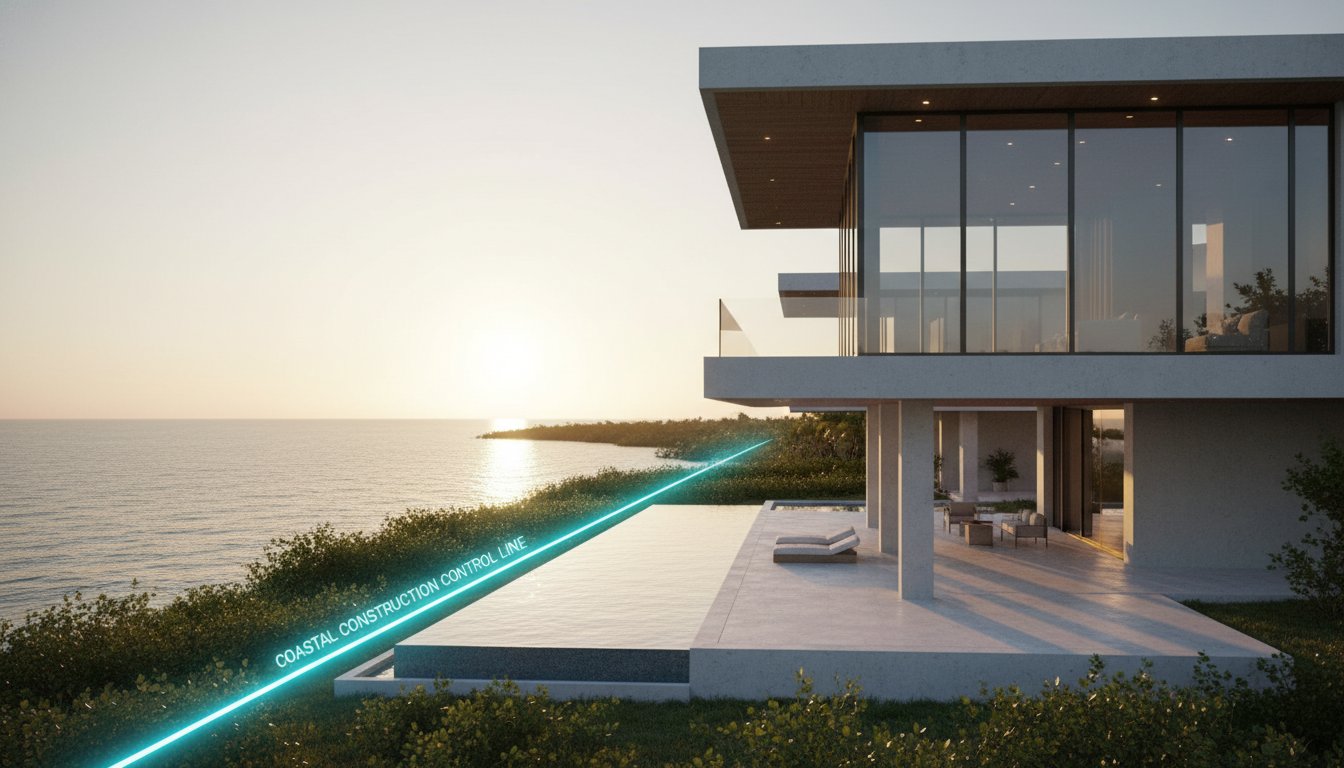
What about the features that define a luxury lifestyle? Infinity-edge pools, heated spas, and sprawling oceanfront decks are all subject to FDEP scrutiny if they sit seaward of the line. The state evaluates these "non-habitable major structures" to ensure they won't become airborne debris during a hurricane or interfere with the beach's natural recovery. While getting a pool permitted in this zone is more complex, it's entirely possible with the right engineering and a sophisticated understanding of the FDEP's criteria.
Building High-End Outdoor Living Spaces
Decks and Tiki huts require specific permits to ensure they don't impede the movement of sand or harm the environment. Lighting is another critical factor. Turtle-friendly lighting isn't just about following the law; it's about protecting our local wildlife. You can still maintain a gorgeous luxury ambiance by using amber LEDs and shielded fixtures that keep the beach dark for nesting turtles while illuminating your outdoor kitchen perfectly. Your choice of palms also matters, as the FDEP prioritizes native, salt-tolerant landscaping that holds the shoreline together naturally.
The Financial Implications of CCCL Compliance
Storm-resilient engineering does come with higher initial construction costs. You're investing in deep pilings and reinforced materials that exceed standard building codes. However, these costs are often offset by lower flood insurance premiums and the long-term protection of your equity. Proving your home meets the most stringent resilience standards significantly boosts resale value by offering future buyers peace of mind and long-term asset protection.
Navigating FDEP Permitting: A Strategic Path for Homeowners
Success in the Florida Keys doesn't happen by accident. It's the result of a coordinated effort between you and a specialized team of professionals. When you're dealing with the complexities of the Florida Keys coastal construction control line guide, your first step should be assembling experts who live and breathe these regulations. You'll need a coastal engineer to handle structural modeling, an environmental consultant to manage habitat protections, and a local real estate advisor who knows which lots have historically struggled with permitting. This collaborative approach transforms a daunting regulatory hurdle into a manageable project plan.
Before you submit a single document, schedule a pre-application meeting with the FDEP. This single conversation can save you months of frustration. It allows the agency to flag potential "siting" issues or environmental concerns before you've spent thousands on finalized blueprints. Depending on the scale of your project, you'll either pursue an Individual Permit for major habitable structures or a General Permit for more standardized work. Once submitted, the public notice process begins. This ensures transparency with your neighbors, though having an expert team means you'll already have the data to address any objections regarding view corridors or beach access.
The Permit Application Timeline
As of June 2026, typical processing times for Upper Keys waterfront projects range from 90 to 180 days, depending on the complexity of the site. One of the most common pitfalls is receiving a Request for Additional Information (RAI) letter. These letters trigger a "stop-the-clock" period that can add weeks to your timeline. You can avoid these delays by ensuring your application is 100% complete from day one. For minor repairs or maintenance, you might qualify for a Field Permit. This is a streamlined process designed to fast-track small-scale work without the lengthy wait times of a major permit application.
Due Diligence Checklist for Waterfront Buyers
If you're currently browsing Luxury Waterfront Homes for Sale in Florida Keys, your due diligence starts with the sales contract. Florida law requires a specific "Coastal Disclosure" statement for properties seaward of the CCCL. This document alerts you to the risks of erosion and the regulatory constraints on the land. You should also verify the permit history for existing structures like docks and seawalls. Unpermitted work from previous owners can become your legal and financial liability after closing. To ensure your investment is protected from the start, consult with a trusted real estate advisor who specializes in high-stakes waterfront negotiations.
Protecting Your Investment: Why Local Expertise is Vital
Buying or selling a luxury estate in the islands is about more than just a beautiful view. It's about understanding the land's history and its regulatory future. This Florida Keys coastal construction control line guide has shown that the CCCL isn't just a hurdle; it's a blueprint for resilience. Having an advocate who understands the "Krissy in the Keys" advantage means you aren't just getting a realtor. You're getting a partner with deep-rooted knowledge of Upper Keys shorelines. We know which stretches of sand are shifting and which are stable, allowing us to negotiate waterfront sales with a level of precision that generalists simply can't match.
When we represent a buyer or seller, we don't just look at the home's aesthetics. We analyze the property's compliance history and its potential for future growth. Are the infinity-edge pools and oceanfront decks fully permitted? Does the current foundation meet the standards for a 100-year storm event? By connecting our clients with the Keys' most reputable coastal engineers and consultants, we ensure that every question is answered before the closing date. This proactive approach integrates CCCL compliance into your luxury lifestyle vision, transforming technical requirements into a source of long-term security. It's about building a legacy that lasts.
Why a Trusted Advisor is Essential for Waterfront Estates
Local knowledge extends beyond state rules. For instance, navigating the specific village ordinances of Islamorada requires a nuanced touch that only comes from years of community integration. We use specialized marketing and sales skills to highlight the "resilience" of our listings, proving to potential buyers that a home is a safe harbor. This ensures your vacation property investment remains legally sound and structurally protected for future generations. It's about peace of mind in a market where the stakes are as high as the tides. You deserve an advisor who can spot a "pocket beach" nuance from a mile away.
Final Thoughts on Coastal Stewardship
Owning a home in the Florida Keys is a privilege that comes with a responsibility to the environment. There's a profound emotional reward in owning a property that respects our delicate ecosystem while offering world-class luxury. Compliant homes aren't just safer; they're the most sought-after assets in the luxury market because they represent a "ready-to-enjoy" lifestyle. When a property is built to current FDEP standards, it commands respect and value. If you're ready to secure your piece of paradise, Contact Krissy to find your protected waterfront sanctuary. We're here to guide you home with confidence and local insight.
Secure Your Coastal Legacy with Confidence
Your journey through this Florida Keys coastal construction control line guide has likely revealed that while regulations are complex, they're the ultimate safeguard for your waterfront investment. We've explored how scientific standards dictate construction and why the "pocket beach" nuance makes local expertise non-negotiable. By understanding the FDEP permitting process and the structural requirements for luxury amenities, you're now equipped to turn regulatory challenges into a blueprint for long-term resilience and value. Building in the islands isn't just about following rules; it's about creating a home that respects the environment and stands the test of time.
With 20 years of Florida Keys real estate expertise, I specialize in the Islamorada and Key Largo luxury markets, where every shoreline has its own story. As a 5-star reviewed trusted advisor, I'm dedicated to helping you navigate these high-stakes transitions with polished competence and local warmth. Ready to find your dream waterfront estate? Explore Krissy's exclusive listings. Your protected island sanctuary is waiting for you, and we're here to ensure your dream remains both compliant and breathtaking for years to come. Let's start the next chapter of your coastal story today.
Frequently Asked Questions
Is the CCCL the same as a setback line?
No, they serve different legal purposes. While a setback is a specific distance from a property line or water body required by local zoning, the CCCL is a jurisdictional boundary that triggers state-level oversight by the FDEP. In many parts of the Keys where a formal line isn't mapped, the 50-foot setback from the mean high-water line acts as the primary regulatory barrier for new construction. Understanding this distinction is vital for ensuring your estate remains compliant with both local and state authorities.
Can I build a pool if my property is seaward of the Coastal Construction Control Line?
Yes, you can build a pool seaward of the line, but it requires a specific FDEP permit and rigorous engineering. The state classifies pools as non-habitable major structures and evaluates them based on their potential to impact the beach system during a 100-year storm. You'll need to demonstrate that your infinity pool or spa won't interfere with natural sand movement or harm nesting sea turtles. These projects often require deep pile foundations to ensure the structure remains stable even if significant erosion occurs.
Does the CCCL affect my ability to get a mortgage or insurance?
It certainly impacts your financial planning, particularly regarding flood insurance. Properties seaward of the line are in high-risk zones, which can lead to higher premiums. However, building to modern standards often mitigates these costs over time. Most lenders will require proof of compliance and adequate insurance coverage before approving a mortgage on a luxury waterfront estate, making this Florida Keys coastal construction control line guide essential for your initial due diligence. Proving resilience is the best way to satisfy both lenders and insurers.
What happens if I perform construction without an FDEP permit in the Keys?
Unpermitted construction can lead to severe legal and financial consequences that can haunt a property for years. The FDEP has the authority to issue stop-work orders, impose daily fines, and even require the total removal of non-compliant structures at your expense. These violations stay with the property title, which can derail future sales or luxury renovations. It's always safer to secure the proper permits before breaking ground on your island sanctuary to avoid these costly and stressful complications.
How often does the FDEP re-establish the CCCL line?
The FDEP doesn't have a fixed schedule for re-establishing these lines. Instead, they update them periodically based on coastal erosion studies and significant changes in shoreline topography. These updates involve public hearings and scientific modeling to ensure the line accurately reflects current risks from storm surges and wave action. Staying informed through an authoritative local expert is the best way to track potential shifts in jurisdictional boundaries that might affect your property's future buildable area.
Are docks and boat lifts regulated by the CCCL or other agencies?
Docks and boat lifts are primarily regulated by the FDEP’s Division of Water Resource Management and the U.S. Army Corps of Engineers rather than the CCCL program itself. However, if the landward portion of your dock or its access walkway crosses the CCCL, you may need a consolidated permit that addresses both sets of regulations. It's a multi-agency process that requires a coordinated strategy to ensure your waterfront amenities are fully legal and environmentally responsible.
Does the 50-foot setback rule apply to every property in Monroe County?
The 50-foot setback specifically applies to waterfront properties in areas where a formal CCCL has not been established by the state. This is common on many pocket beaches and rocky shorelines throughout the Keys. If your property is in a zone where the CCCL is officially mapped, the state's jurisdictional line takes precedence over the county's default setback for most major construction projects. This Florida Keys coastal construction control line guide helps you identify which rule governs your specific stretch of paradise.
Can I remove native vegetation like mangroves if they are seaward of the CCCL?
Removing native, salt-tolerant vegetation like mangroves or sea oats is strictly regulated and generally prohibited without a specific permit. These plants are vital for shoreline stabilization and habitat protection. The FDEP requires homeowners to preserve or even enhance native landscaping as a condition of many permits. Protecting the natural ecosystem isn't just about compliance; it's the most effective way to protect your property's value and its natural defense against the elements.