

Public sewer isn’t automatically the simpler choice for every Tavernier home. When weighing septic versus sewer pros and cons in Tavernier, FL, start with the property’s setup, site conditions, and the responsibilities you’re prepared to manage. Septic treats wastewater on-site; sewer carries it to centralized treatment.
It’s natural to focus on upfront costs, but the long-term picture matters too. Septic ownership involves regular pumping and responsibility for system repairs, while public sewer typically brings monthly utility charges and less routine homeowner maintenance. Neither option is free of costs or considerations.
This comparison explains how the systems work, where their costs and trade-offs differ, and which property factors can affect the decision. Available infrastructure, space for a septic system, and your preferred level of maintenance all deserve attention when evaluating a Tavernier home. The goal is to understand what suits the property and how you plan to use it.
Key Takeaways
- Understand how septic systems treat wastewater on-site and how public sewer carries it to centralized treatment.
- Compare the ongoing responsibilities of septic ownership with the utility charges and maintenance profile of public sewer.
- See how property layout, soil suitability, and available infrastructure can influence which system fits a home.
- Thank you for reading. Please get in touch with any questions or requests for clarification, and ask for a list of current homes on the market.
Septic system or public sewer: which is better?
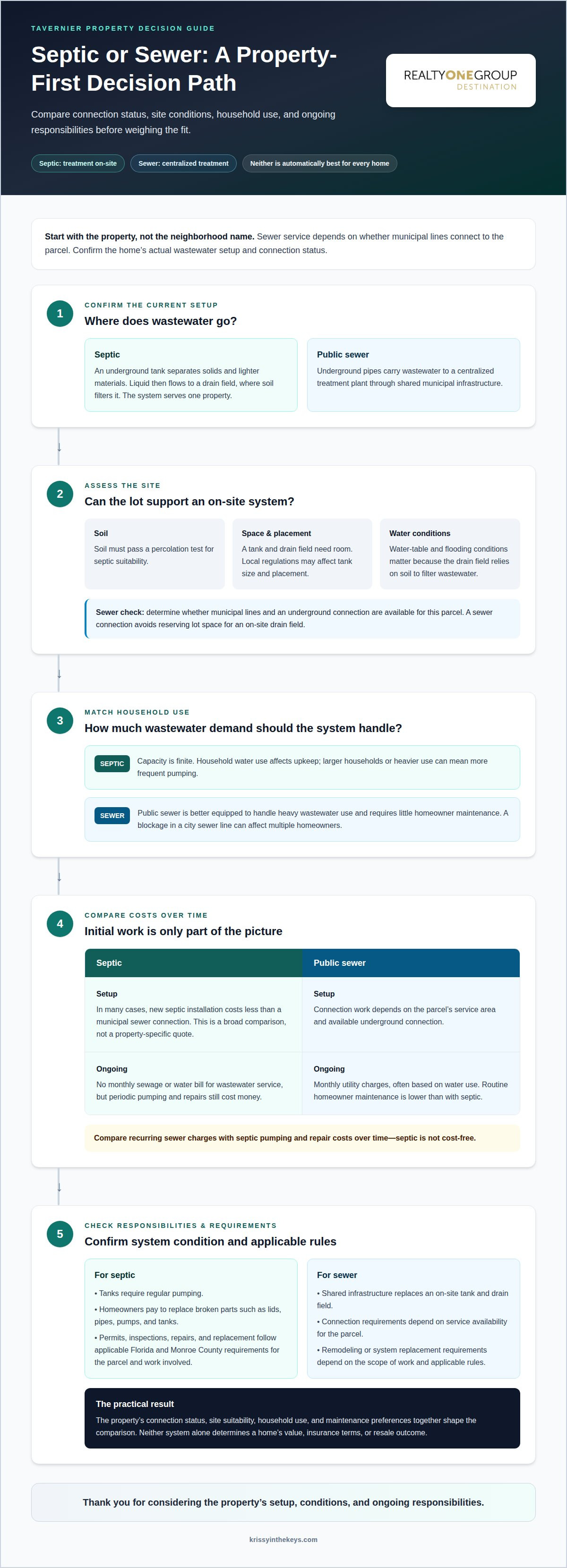
Neither system is automatically better for every Tavernier property. The key difference is where wastewater treatment happens and whether the home has access to municipal sewer lines.
Septic Household Wastewater Treatment
A septic system treats household wastewater on-site, using an underground tank and a drain field. First, wastewater enters the tank; solids settle, while grease and lighter materials float. Then liquid flows to the drain field, where soil filters it. Unlike municipal sewer, this setup serves one property rather than a shared network. For example, a home without sewer access may rely on its own tank and drain field.
Tavernier Sewer and Septic Coverage
Public sewer service depends on whether municipal sewer lines connect to a property; septic systems serve properties without that access. Sewer carries wastewater through underground pipes to a centralized treatment plant, where wastewater treatment occurs before discharge. There is no neighborhood-wide boundary established here for Tavernier, so a community name alone doesn’t identify a home’s system. The property’s connection status is the useful distinction.
Local Septic Rules and Requirements
Permits, inspections, repairs, and replacement are subject to applicable Florida and Monroe County requirements for the parcel and work involved. The practical ownership distinction is clear: septic tanks require regular pumping, and homeowners pay to replace broken parts such as lids, pipes, pumps, and tanks. Municipal sewer uses shared infrastructure instead of an on-site tank and drain field.
Property Value, Insurance, and Resale
Sewer availability and septic status are property factors, but neither system alone determines a home’s value, insurance terms, or resale outcome. When comparing two Tavernier homes, consider the ongoing responsibilities of septic ownership alongside the costs of sewer service. System condition and connection status are relevant details. An on-site tank, for example, means there’s a private wastewater system to consider.
| Option | Where wastewater is treated | Network |
|---|---|---|
| Septic | On-site tank and drain field | Serves the property |
| Public sewer | Central treatment plant | Shared municipal sewer lines |
Choose by comparing the property’s connection status and wastewater system responsibilities.
Septic installation, sewer connection, and ongoing costs
Compare initial work with recurring bills and upkeep, rather than focusing only on installation costs. The property’s existing setup also affects which expenses apply.
Septic System Costs, Lifespan, and Capacity
A septic system is a private wastewater setup with finite capacity, so household water use affects its upkeep. Regular maintenance can help septic tanks remain in service, while pumping needs vary with household water use. Larger households or heavier water use can mean more frequent pumping.
Installation and Sewer Connection Costs
Installing septic means creating an on-site system; a sewer connection ties the home into underground pipes leading to centralized treatment. In many cases, new septic installation costs less than a municipal sewer connection. These are broad cost comparisons, not a quote for a particular Tavernier property.
Monthly Sewer and Septic Expenses
A home connected to public sewer pays monthly utility charges, often based on water use. A septic system has no monthly sewage or water bill for wastewater service, but ownership still involves periodic pumping and repair costs. Compare the recurring sewer bill with septic maintenance over time rather than treating septic as cost-free.
Connection Requirements and System Repairs
Tavernier’s sewer utility and connection process depend on the parcel’s service area and available underground connection. A sale alone doesn’t determine whether upgrades are required; remodeling or replacing a system depends on the work’s scope and applicable requirements. Septic failures can cause slow drains, sewage backups, foul smells, or pooling water. Homeowners pay to replace broken parts, including lids, pipes, pumps, and tanks. Repair costs depend on the failed component and work needed.
Factors to consider when choosing septic or sewer
When weighing septic versus sewer system pros and cons in Tavernier, FL, start with the property’s existing wastewater setup, available infrastructure, and intended use. The system already in place can shape your practical choices and responsibilities as an owner.
Soil and lot conditions matter when assessing whether septic is suitable. The soil must pass a percolation test, and local regulations may determine tank size and placement. That can limit options on a smaller parcel. Water-table and flooding conditions matter too, because the drain field relies on soil to filter wastewater. These site conditions help explain why nearby properties can have different septic prospects.
Space is another key difference. A septic system needs room for its tank and drain field, while municipal sewer relies on underground infrastructure. Limited usable area can make septic placement more challenging on a small lot. Where sewer lines are available, a connection avoids reserving space for an on-site drain field, though connection work and ongoing utility charges still matter.
Consider household use, too. Septic systems are designed for a limited daily wastewater volume, so a larger household or heavier water use can put more demand on the system. Public sewer is better equipped to handle heavy wastewater use and requires little homeowner maintenance. The trade-off is reliance on a shared network: a blockage in a city sewer line can affect multiple homeowners.
Maintenance history changes the comparison. A properly maintained septic system can serve for decades. Sewer infrastructure can also be damaged by aging pipes or tree roots, potentially causing leaks or overflows. When assessing a home, system condition matters as much as system type.
Ultimately, the pros and cons of septic versus sewer in Tavernier, FL depend on access, site suitability, lot space, household wastewater needs, and system condition. A home with usable sewer infrastructure may suit buyers who prefer less routine maintenance. A property without sewer access depends on a suitable, properly maintained septic system.
Properties with available sewer lines can connect to public sewer; properties without sewer access rely on suitable septic systems.
This section refers to municipal or public sewer. Connections depend on available sewer lines and require connection work; ongoing utility charges also matter.
Pros and cons of public sewer systems
For Tavernier buyers, public sewer trades private-system upkeep for reliance on shared infrastructure. Its advantages matter most when sewer access and the household’s needs suit the property.
Public Sewer Advantages
A municipal sewer network carries household wastewater through underground pipes to centralized treatment. Its shared capacity is better equipped to handle periods of heavy wastewater use than an individual septic system. Homeowners also have little routine system maintenance, unlike septic owners, who manage pumping and on-site components.
This can suit a household that prefers a shared service over maintaining a private tank and drain field. Centralized wastewater treatment also takes place away from the home. The practical advantage is less routine homeowner involvement, not the absence of utility charges or infrastructure-related risks.
Compare this with a properly maintained septic system, which can last for decades and return treated effluent to the property. Septic treatment happens on-site, while public sewer depends on treatment plants and a connected network. The difference is whether the homeowner manages a system on the property or relies on shared municipal infrastructure.
Public Sewer Drawbacks
Shared infrastructure creates a shared point of vulnerability. A blockage in a city sewer line can affect multiple homeowners, while aging pipes or tree roots can contribute to leaks or overflows. Sewer service also uses energy-intensive treatment processes.
Septic systems carry different risks, while sewer problems can occur in underground lines beyond an individual home. Neither system is risk-free; the source and location of potential problems differ. For a buyer, this distinction helps frame the trade-off between private upkeep and reliance on a shared network.
Public sewer may suit buyers who value limited routine maintenance and the network’s capacity for heavier wastewater use. Its drawbacks include ongoing utility charges and reliance on infrastructure shared with other households. Compare these trade-offs with the home’s existing system and condition before weighing the options.
Please get in touch with any questions or requests for clarification, and we’ll be happy to provide a list of current homes on the market. Thank you for your interest.
Krissy in the Keys (Krissy Carnahan, Realtor)
Krissy in the Keys (Krissy Carnahan, Realtor) can help you weigh a home’s wastewater setup alongside its location, layout, and intended use in Tavernier, Islamorada, Key Largo, and the Upper Keys. Buyer Representation for Luxury Estates provides guidance as you compare properties and consider how septic or sewer responsibilities fit your plans. Sellers can also account for a property’s system when presenting its features to prospective buyers.
As you narrow your options, explore current homes for sale and consider each property’s system as part of the full picture. Thank you for reading. Please contact Krissy in the Keys with any questions or requests for clarification, or to ask for a list of current homes on the market.
Make Your Next Tavernier Move With Confidence
Treat the wastewater system as one part of a broader property decision. The septic-versus-sewer pros and cons in Tavernier, Florida can help frame the questions, but the home’s layout, condition, and fit with your plans matter just as much. Consider how it will serve your daily life, seasonal visits, or future resale goals.
Krissy in the Keys (Krissy Carnahan, Realtor) offers Luxury Waterfront Home Sales, Buyer Representation for Luxury Estates, and Seller Representation of Luxury Estates. Whether you’re buying or preparing to sell in Tavernier, Islamorada, Key Largo, or the Upper Keys, this real estate guidance can help you consider a property’s wastewater setup alongside its other features.
Have questions or looking for current homes on the market? Contact Krissy in the Keys to discuss your plans and get personalized real estate guidance.
Frequently Asked Questions
What is the difference between septic and sewer?
A septic system handles wastewater on the property, while sewer service uses a shared municipal network. For a homebuyer, the distinction affects which system serves the home and what responsibilities come with it. A septic property has its own wastewater setup; a sewer-connected property relies on public infrastructure. Understand the property’s system and condition when comparing homes.
Which Is Better?
Neither option is the best fit for every home or buyer. Sewer may appeal if you prefer less routine system maintenance, while septic may suit a property without sewer access if you’re comfortable with on-site upkeep. Consider how you plan to use the home and which responsibilities better match your priorities. The right fit also depends on the specific property.
What are the current sewer connection fees, monthly charges, and septic costs in Tavernier?
Costs vary with the property and the work involved. A sewer connection can involve installation and connection expenses, followed by monthly utility charges based on water use. Septic costs depend on the system’s condition and needs, such as pumping or replacing damaged components. For a Tavernier home, separate initial costs from recurring expenses to compare ownership costs more clearly.
How do septic and sewer systems compare in upfront cost and long-term maintenance in Tavernier?
Upfront expenses depend on whether the home already has a working system or needs installation or connection work. Long-term costs differ too: sewer owners pay utility charges, while septic owners budget for periodic maintenance and repairs. When comparing homes, consider the existing system’s condition and the expenses that could arise during ownership. This gives you a clearer basis for comparing properties.
What should buyers consider when comparing septic and sewer in Tavernier?
Both systems have different responsibilities and costs. Sewer owners pay utility charges, while septic owners budget for periodic maintenance and repairs. For buyers, the system serving the home is a practical part of assessing a property. Consider the system’s condition, whether installation or connection work is needed, and the expenses that could arise during ownership.
Thank you for reading. Please get in touch with any questions or requests for clarification, or to ask for a list of current homes on the market.


