

The biggest mistakes to avoid when selling a home in the Upper Keys include pricing without a clear view of comparable sales, overlooking preparation, making showings difficult, and waiting for a supposedly perfect market moment. A more grounded approach is to present your home thoughtfully, stay flexible for buyers, and choose a timeline that fits your plans. You don’t need to predict the market to make a considered sale.
Selling a home in the Upper Keys can feel personal, especially when its waterfront setting or relaxed Keys lifestyle has been part of your life. It’s natural to want the timing and price to feel right. Focus on the choices you can shape rather than trying to predict every market turn.
This guide covers preparing your property, managing showings with less stress, and choosing a sale timeline around your priorities. You’ll also learn how to avoid common missteps in pricing and repairs, so you can approach each decision with greater clarity and confidence.
Key Takeaways
- Make the home feel welcoming by clearing visual clutter and giving key spaces a thoughtful, polished presentation.
- Prioritize repairs that affect a buyer’s impression, and consider whether a pre-listing inspection could help you plan ahead.
- Set up a showing routine that keeps the property accessible while making the process feel manageable for you.
- Choose a sale timeline around your plans and priorities instead of waiting for a perfect moment to predict the market.
1. Staging, decluttering, and improving curb appeal
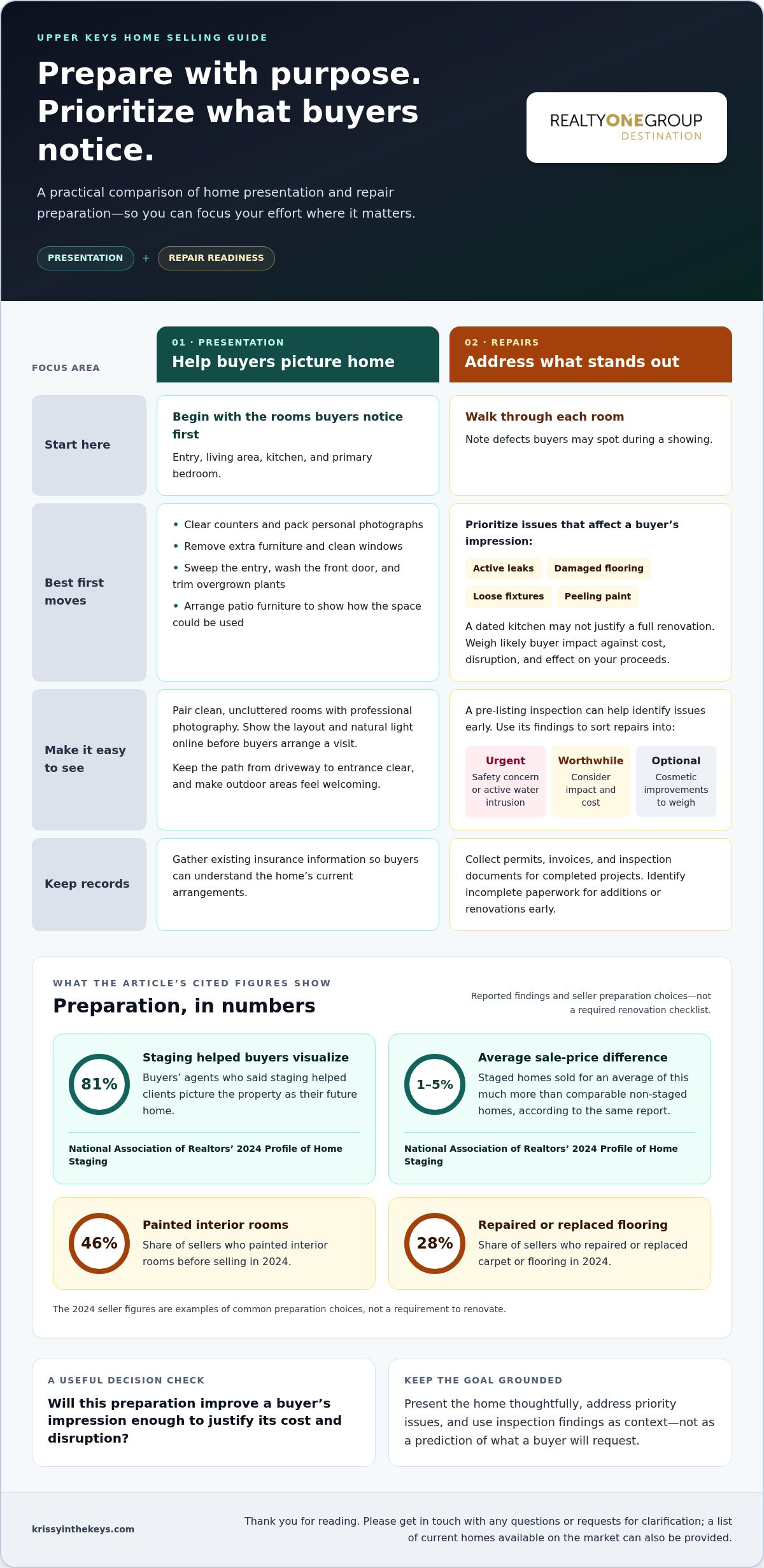
Start with the rooms buyers notice first: the entry, living area, kitchen, and primary bedroom. Clear counters, pack personal photographs, remove extra furniture, and clean windows to make each space easier to understand. The National Association of Realtors’ 2024 Profile of Home Staging found that 81% of buyers’ agents said staging helped clients visualize a property as their future home. The same report found staged homes sold for an average of 1-5% more than comparable non-staged homes.
Give outdoor areas the same attention as interior rooms. Sweep the entry, wash the front door, trim overgrown plants, and arrange patio furniture to show how buyers could use the space. A clear path from the driveway to the entrance, for example, feels more welcoming than cluttered steps or stored equipment. Pair clean, uncluttered rooms with professional photography so buyers can see the home’s layout and natural light online before arranging a visit.
Flood and wind insurance costs depend on property-specific factors, including location, construction details, and selected coverage. Gather existing insurance information before listing so buyers can understand the home’s current arrangements.
Closing costs, taxes, and real estate commission terms affect your net proceeds, so review them alongside the expected sale price. Ask for a net-sheet estimate that accounts for transaction expenses, applicable property taxes, and the commission terms in your listing agreement. For sellers exploring direct marketing models that minimize commission expenses, platforms such as Kincade International Direct Sales demonstrate how homeowners can manage their own listings to retain more equity.
To price a home in Key Largo, Islamorada, or elsewhere in the Upper Keys, compare it with recently sold nearby properties that share relevant characteristics. Consider location, condition, size, and features rather than relying on an unrelated asking price or an old refinance appraisal.
Buyers may consider flood-zone location, elevation, and hurricane-related property condition when evaluating a home. Present available property information clearly so they can assess how those factors relate to their plans and insurance considerations.
For septic systems, sewer connections, and water quality, describe the property’s setup accurately and gather relevant records. Buyers may consider the system type, condition, connection details, and available water-quality information when assessing the home.
2. Making repairs and considering a pre-listing inspection
Before listing, walk through each room and note defects buyers could spot during a showing. Prioritize active leaks, damaged flooring, loose fixtures, and peeling paint over purely cosmetic upgrades. A dripping faucet is a straightforward repair; a dated kitchen may not justify a full renovation. Compare each project’s likely impact on buyers with its cost, disruption, and effect on your proceeds.
Keep the scope realistic. In 2024, 46 percent of sellers painted interior rooms before selling, while 28 percent repaired or replaced carpet or flooring. These examples show common preparation choices, not a required renovation checklist. Fresh paint in a scuffed hallway or a repaired patch of flooring can make a home feel cared for without changing its character.
A pre-listing inspection can help identify issues before buyers raise them. The typical U.S. home inspection uncovers minor maintenance needs that are best addressed proactively. Use the findings to sort repairs into urgent, worthwhile, and optional categories. For example, address a safety concern or active water intrusion first, then weigh whether a cosmetic improvement will make the listing more appealing.
Permit or code concerns can complicate a sale if past work lacks clear records or prompts questions during a buyer’s review. Gather permits, invoices, and inspection documents for completed projects before listing. If an addition or renovation has incomplete paperwork, identify the issue early so you can address its status and supporting records during preparation.
Repair decisions can also shape negotiations. Treat inspection findings as context, not a prediction of what a buyer will request or what a repair will cost. An inspection report can help you decide what to fix, disclose, or account for in your asking price.
Once repair priorities are clear, revisit your home’s estimated value in light of its condition and comparable sales.
3. Managing emotions and accommodating showings
Set a simple showing routine before the first appointment. Put away valuables, secure medications, open interior doors, and leave the home ready for buyers to explore. If you live in the home, choose a place to go during visits so buyers can speak candidly. A clear plan also helps you avoid taking feedback personally. Buyers may compare layout, condition, and asking price, not the memories attached to each room.
Make access practical. Share available showing windows, keep entry instructions clear, and consider reasonable requests before turning them down. A buyer with limited availability may not return for a second visit. Keep a short checklist by the door: lights on, counters clear, pets secured, and temperature comfortable. These small steps help buyers focus on the property rather than the logistics of getting inside.
Online presentation supports in-person visits. Use accurate, well-lit photos that show room connections, outdoor living areas, and distinctive features without hiding flaws. If a photo shows a waterfront view, make sure it reflects what buyers will see at the property. After each showing, ask for specific feedback: what stood out, what raised concerns, and whether the buyer wants another look. Patterns in responses can help you assess whether the home is priced and presented effectively.
Keep negotiations separate from emotion. A low offer or repair request is information to evaluate, not a judgment on your home or how you’ve cared for it. If multiple offers arrive, compare financing, contingencies, deposit, and closing date alongside price. For a waterfront sale in Monroe County, distinguish a dock on the property from any separate boating-access arrangement. Describe the dock and access using the property’s records, since what transfers depends on documented ownership and access terms.
4. Choosing a sale timeline instead of trying to time the market
Choose a listing window around your move, finances, and readiness, not a prediction about the perfect market day. A sale involves preparation, showings, negotiation, inspection, and closing, so work backward from when you need the proceeds or possession. If you must relocate by a set date, allow room for buyer negotiations and transaction steps instead of listing at the last minute.
Seasonality can inform the decision, but it shouldn’t control it. U.S. homes sold during peak months from May through July command a seller premium of 5-10% compared with homes sold during the slowest months from November through February. Zillow data also identifies mid-March through late July as the strongest listing period in most places. Those national patterns offer context, not a guaranteed Upper Keys result.
Local readiness and comparable sales matter more than chasing a calendar. Review recently sold homes in the same neighborhood, then weigh their condition, location, and features against yours. If your home needs repairs or careful preparation, listing before that work is complete may weaken its first impression. A realistic schedule gives you time to finish priority tasks and enter the market prepared.
Plan for the closing date as well as the listing date. A buyer proposing a 90-day closing may not fit a seller who needs to move quickly. For homeowners prioritizing speed or certainty over traditional mortgage timelines, direct acquisition resources like lpsrealestategroup.com offer flexible cash and creative sale structures. Before you negotiate, decide which terms matter most: timing, contingencies, financing, or flexibility after closing. That clarity helps you compare offers without letting a headline price dictate the decision.
To sell your home on a timeline that fits, set a target move date first, then map backward through preparation and transaction milestones. A well-chosen window supports your plans; waiting for a market signal you can’t control may only delay them.
Review your home’s estimated value
Krissy in the Keys (Krissy Carnahan, Realtor): Luxury Waterfront Home Sales
Krissy Carnahan, Realtor, offers Seller Representation of Luxury Estates, including guidance for owners preparing a waterfront property for market. Turn to Krissy in the Keys when you’re ready to shape a listing plan, present your home thoughtfully, and weigh buyer offers and terms. Professional photography, video, aerial drone imaging, and multi-channel marketing help showcase your property, while experienced negotiation supports you as you evaluate offers.
For an Upper Keys home with distinctive waterfront features, a thoughtful approach can help communicate the property’s setting and appeal clearly to prospective buyers. If you’re considering a sale, reach out with questions or requests for clarification. Prospective buyers can also ask for a list of current homes on the market. Thank you for considering Krissy in the Keys.
Take the Next Step With Confidence
Your next move is to turn your preferred sale timeline into a clear plan, shaped around your property and priorities. Avoiding mistakes when selling a home in the Upper Keys starts with having a trusted advisor beside you as you prepare to list and consider offers.
Krissy Carnahan, Realtor, offers Luxury Waterfront Home Sales and Seller Representation of Luxury Estates. For buyers exploring a future Florida Keys property, she also provides Buyer Representation for Luxury Estates. Whether you’re preparing to sell or beginning a search, personalized guidance and local insight can make the process easier to navigate.
Thank you for reading. Please get in touch with any questions or requests for clarification, or to receive a list of current homes on the market.
Frequently Asked Questions
Want to Avoid These Mistakes?
To avoid mistakes when selling a home in the Upper Keys, decide how you’ll evaluate an offer before one arrives. Write down the net proceeds and timing that work for you, then compare each offer against those priorities. Keep a record of buyer questions and your answers, too. Consistent, accurate details make it easier to respond clearly throughout negotiations.
What Are You Legally Required to Disclose?
Disclosure duties depend on the property and applicable requirements. Common disclosure categories include natural hazards, pests, major neighborhood nuisances, and structural defects. Think beyond visible wear: a nearby nuisance or a known structural concern may also matter to a buyer. Organize relevant property information by topic so you can give clear, consistent answers as questions arise.
What are the most common mistakes Upper Keys homeowners make when selling?
Common mistakes to avoid when selling a home in the Upper Keys include overlooking buyers’ need for clear property details and evaluating an offer by its headline price alone. For a waterfront home, explain its features clearly and distinguish documented details from general descriptions. Comparing the full terms of an offer can help you focus on the transaction that best fits your plans.
What Florida seller disclosures are required for homes in the Upper Keys?
Disclosure requirements vary by location, so use the applicable transaction documents and provide accurate information about known property conditions. Relevant topics can include hazards, pests, neighborhood nuisances, and structural issues. Keep supporting records together and make sure the information in your disclosure paperwork matches what you communicate during the sale. This helps avoid confusion when buyers review the property details.
How should sellers prepare and market a home for sale in the Upper Keys?
Build your listing around accurate property details, then share it through the channels buyers use to find homes. Krissy in the Keys provides seller representation with MLS listings and marketing across real estate websites, social media, email campaigns, and agent networks. For personalized guidance on selling in Islamorada, Key Largo, Tavernier, or the Upper Keys, contact Krissy Carnahan.
How do flood zones, elevation, and hurricane risk affect Upper Keys home sales?
Buyers may consider flood-zone location, elevation, and hurricane-related property condition when assessing a home and its insurance considerations. Flood and wind insurance costs depend on factors such as location, construction details, and selected coverage, so gather available property and insurance information.


